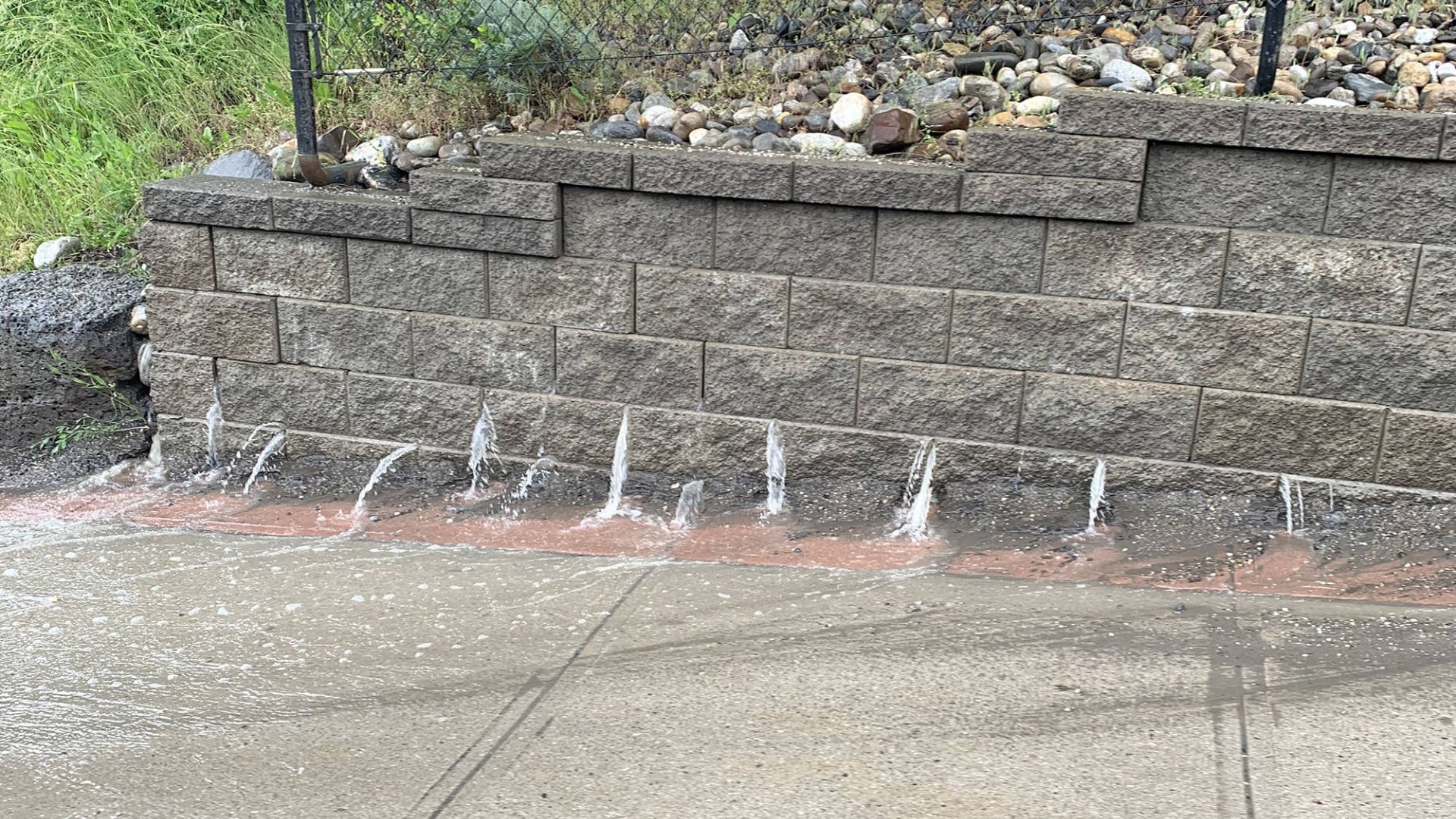
Water is one of the most destructive forces in any landscape. Poor drainage can lead to soil erosion, standing water, foundation damage, washed-out mulch, unusable lawn areas, and failing hardscapes. For Michigan homeowners dealing with sloped yards or heavy rainfall, a retaining wall designed for drainage is one of the most reliable and effective solutions.
Retaining walls aren’t just for aesthetics—they’re engineered structures that support soil, redirect water flow, and stabilize outdoor environments. When built with proper drainage systems, they prevent water from accumulating in unwanted areas and protect your landscape from long-term damage.
In this blog, we’ll explain how retaining walls help solve drainage problems, what materials work best, where these walls are most beneficial, and why Driftwood Landscape’s engineering-focused installation ensures lasting performance.
Water naturally follows gravity—and without proper control, it can cause major issues. Retaining walls help manage water in several important ways:
Yards with hills or uneven grading are prone to erosion. Water washes soil downhill, causing:
A retaining wall holds soil in place and creates stable, level terraces.
Water pooling near the home foundation can lead to:
Retaining walls with built-in drainage systems move water away from vulnerable structures.
Low spots easily collect water after storms. Retaining walls reshape the landscape, eliminate dips, and guide water toward proper drainage zones.
Drainage-focused retaining walls often include:
These help water escape safely instead of building up behind the wall.
Sloped yards often make it difficult to install:
Retaining walls flatten and stabilize these areas while improving drainage.
Heavy rain can sweep mulch across sidewalks and driveways. Low retaining walls provide a barrier that keeps beds in place.
Only certain wall materials offer the necessary strength and drainage performance.
These engineered systems are ideal for drainage because they:
Perfect for medium to large retaining walls.
Stone walls offer:
Best for small to medium walls.
Boulders are excellent for drainage due to their:
Ideal for rustic landscapes and large hillside work.
Limestone provides a clean, modern look while offering:
A popular choice for front-yard and entry designs.
Proper drainage is what makes or breaks a retaining wall. Driftwood Landscape builds walls using industry-best practices to ensure long-term performance.
A strong foundation prevents:
The base must be stable for proper drainage.
A layer of clean gravel behind the wall:
This is a must-have for drainage-focused walls.
Installed behind the wall to:
The pipe sits at the base of the wall for maximum effectiveness.
Larger walls require geogrid to increase stability and handle pressure from soil and water.
Modern walls lean slightly into the slope to counteract pressure.
Allow water to escape through the front rather than buildup behind.
If your property has water issues, strategic wall placement can make a huge difference.
Walls reshape the flow of water and stabilize the landscape.
Look for these red flags:
A retaining wall may be the most effective solution.

Driftwood Landscape installs drainage-engineered retaining walls that protect your home, prevent erosion, and reshape your outdoor space beautifully.