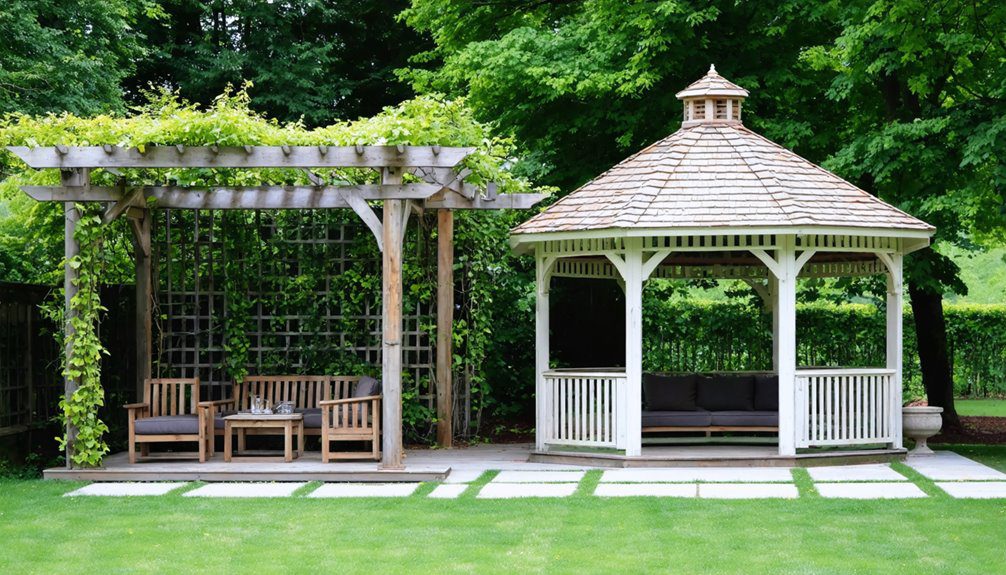
A patio without a defined structure over it can feel like an unfinished thought — open, exposed, and a little too dependent on perfect weather to actually get used. A pergola changes that. It gives an outdoor space a ceiling, a sense of enclosure, and shade exactly where you need it, without fully closing off the sky the way a solid roof would.
Pergola vs. Other Outdoor Structures
We build several types of structures, and picking the right one depends on how you'll use the space:
Traditional pergolas — open-lattice roof structures that provide partial shade while letting light filter through, ideal for defining a dining or lounge area without blocking it out completely.
Louvered/adjustable pergolas — modern aluminum systems with rotating louvers that let you control shade and rain protection on demand, popular for clients who want flexibility without committing to a fully solid roof.
Pavilions — fully roofed, freestanding structures that provide complete weather protection, often used over outdoor kitchens or larger entertaining areas where full coverage matters more than partial shade.
Arbors and trellises — smaller-scale structures, often used as an entry feature or to support climbing plants, adding vertical interest rather than functioning as a full living space cover.
Material Options Built for Michigan Winters
Cedar and other quality woods offer a warm, natural look but require regular staining or sealing to hold up against Michigan's freeze-thaw cycles and moisture. Aluminum and vinyl structures require far less maintenance and resist warping, cracking, and rot, making them an increasingly popular choice for Oakland County homeowners who want the aesthetic without the annual upkeep. We walk through the tradeoffs of each material honestly rather than pushing whichever is easiest for us to install.
Structural Considerations Specific to This Region
Snow load is the single biggest engineering factor we account for that homeowners rarely think about upfront. A pergola or pavilion here needs footings and structural framing rated to handle accumulated snow weight through winter, not just wind and rain like it might in a milder climate. We size posts, beams, and footings according to local building code and expected load, and where required, we handle permitting so the structure is fully compliant rather than something that could become an issue at resale.
Pairing Structures With Existing Hardscape
Pergolas rarely function well as standalone additions — they're most effective when integrated with a patio, outdoor kitchen, or fire feature underneath. We design the structure's footprint and post placement around what's happening beneath it, ensuring there's no awkward post positioning that interrupts seating, cooking zones, or walkways.
Lighting, Fans, and Add-Ons
Many clients add string lighting, integrated can lights, or ceiling fans to their pergola or pavilion once it's built. We plan electrical runs during initial construction whenever possible, since running power to an existing structure afterward is more invasive and costly than wiring it in from the start.
What Determines Cost
Pricing depends heavily on structure type, size, and material — a basic cedar pergola is a more accessible investment than a full aluminum louvered pergola or a pavilion with a solid roof and integrated lighting. We scope the project around your specific goals and existing patio layout during your consultation.
The team at Driftwood Landscape designs outdoor structures across Birmingham, Bloomfield Hills, and Rochester Hills that hold up through real Michigan winters, not just a showroom photo.

Schedule Your Free Consultation with Driftwood Landscape →
Let's give your patio the ceiling it's been missing.