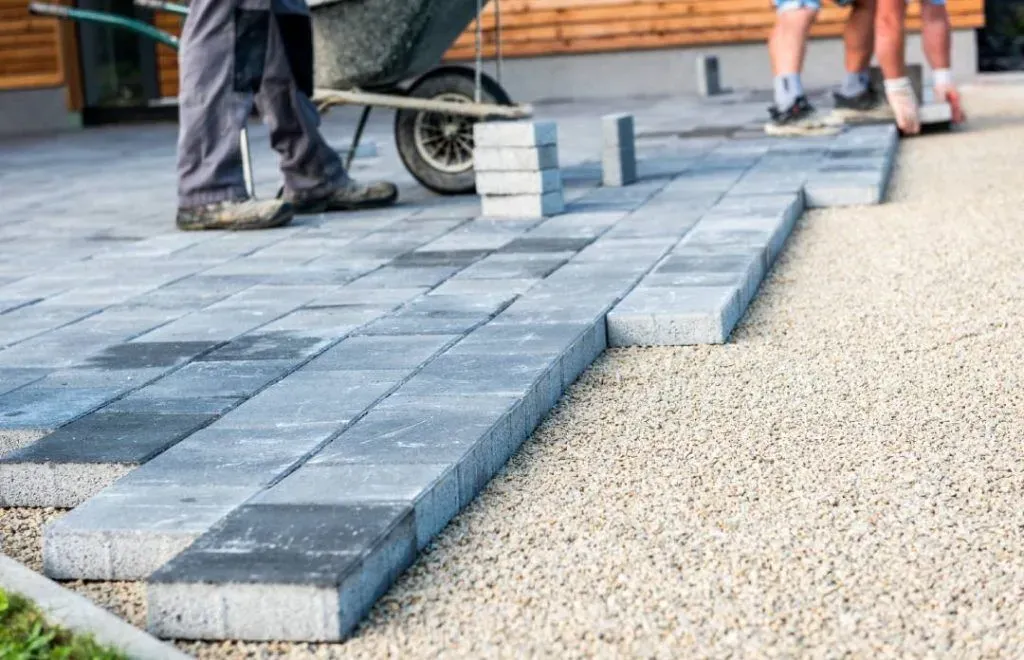
Paver patios and walkways are known for their durability and long-term performance. But even the best-installed paver surfaces eventually show signs of wear from weather, settling soil, heavy use, and time. The good news? Most paver issues don’t require a full replacement—professional paver repair and restoration can revive your outdoor surface and make it look new again.
From sunken pavers and shifting joints to weed growth, staining, and edge failure, restoration solves the most common problems homeowners face. Instead of investing in an entirely new patio or walkway, repair allows you to extend the life and beauty of your existing hardscape for a fraction of the cost.
In this blog, we’ll explore why paver restoration is such a smart investment, the most common issues it solves, what the repair process includes, and why Driftwood Landscape is the trusted choice for restoring pavers across Michigan.
Pavers are designed to be long-lasting—and they’re one of the few hardscape materials that can be easily restored.
Replacing an entire paver patio can be costly. Repairing:
In many cases, pavers simply need leveling, cleaning, and joint restoration—not a full rebuild.
If you love your current paver design, restoration preserves:
You get the same beautiful surface—just refreshed and leveled.
Uneven or sunken pavers create tripping hazards. Repair work:
This is especially important for front walkways and patio steps.
Over time, sand joints break down, allowing:
Professional restoration includes cleaning out joints and installing new polymeric sand to lock pavers in place.
Deep cleaning and joint restoration dramatically improve appearance by removing:
Your patio or walkway gains renewed color and vibrancy.
Restoration protects your patio investment by:
Well-maintained pavers last 30–50+ years.
If your patio or walkway has any of these issues, restoration is the perfect solution.
Caused by:
Pavers are lifted, the base is rebuilt, and stones are leveled back into place.
Often caused by edge restraint failure. Reinstalling or reinforcing the edging solves the issue.
A sign that joint sand has washed out. Polymeric sand replacement fixes this.
Can come from:
Pressure washing and surface cleaners restore the original look.
Re-leveling and proper grading ensure water flows away from the patio or walkway.
Edges drifting outward due to:
Proper edging installation fixes this permanently.
Driftwood Landscape provides a complete paver restoration process to make your system look and perform like new.
We evaluate:
Then we create a repair plan tailored to your hardscape.
Sunken or uneven areas are lifted, and the base is:
This ensures long-term stability.
Removes:
Your pavers regain their natural color.
New sand is swept into joints and activated to:
New or improved edging prevents shifting and keeps the patio or walkway aligned.
Sealing offers:
Many homeowners choose sealing for high-traffic areas.
Restoration is ideal when:
Replacement is recommended only if:
Driftwood helps you choose the best option for your property.

Driftwood Landscape provides expert paver repair and restoration designed to enhance curb appeal, safety, and long-term durability.