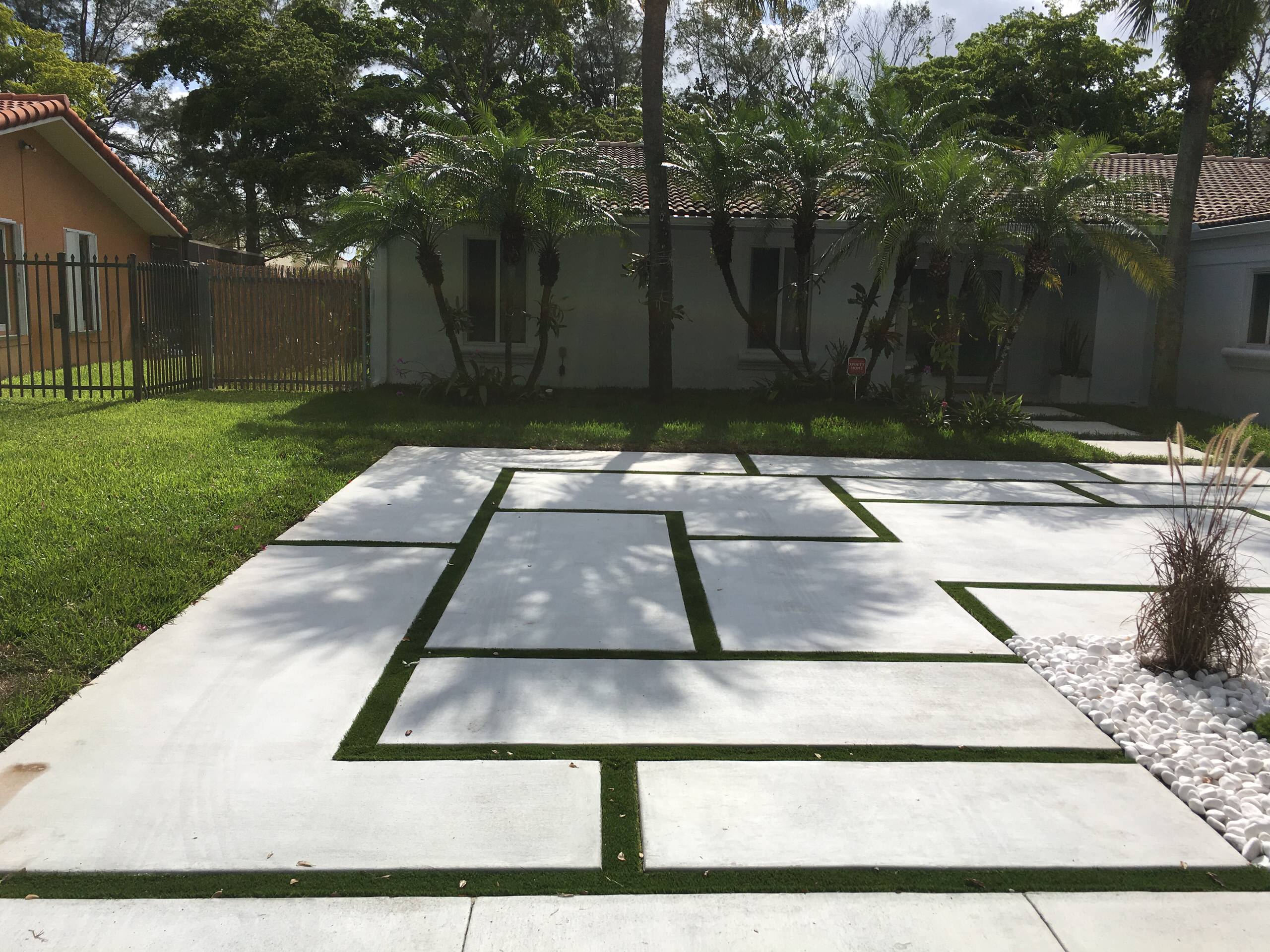
Nearly every outdoor structure depends on a strong foundation. Whether you're installing a shed, hot tub, generator, AC unit, or piece of heavy equipment, the base beneath it is just as important as the structure itself. That’s why homeowners choose concrete pads—a durable, level, long-lasting surface that prevents sinking, shifting, cracking, and equipment failure.
Concrete pads provide unmatched support for exterior features that require stability and load-bearing strength. Without a proper concrete base, structures may tilt, doors may jam, hot tubs may become uneven, and equipment may malfunction over time. A professionally installed concrete pad eliminates these issues and ensures long-term performance.
In this blog, we’ll explore why concrete pads are essential, what they’re used for, design and sizing considerations, and why Driftwood Landscape builds pads that endure Michigan’s tough climate.
Concrete pads are more than a simple slab of concrete—they’re engineered surfaces designed to support significant weight and resist movement.
Outdoor structures require a perfectly level base to function correctly. Concrete pads ensure:
A level surface protects your investment.
Soil movement, moisture, and freeze–thaw cycles are common in Michigan. Without a concrete pad, structures can:
Concrete pads minimize these risks with a compacted gravel base and solid concrete surface.
Concrete pads are engineered to support thousands of pounds. Essential for:
Concrete is the only material strong enough for these loads.
A stable pad prevents:
Especially important for hot tubs and electrical units.
Grass, gravel, or wood foundations require constant upkeep. Concrete pads:
This makes them a long-term, low-maintenance option.
Concrete pads support a wide variety of outdoor features. Here are the most common installations:
A stable pad prevents:
A concrete base keeps your shed airtight and structurally sound.
Hot tubs can weigh 3,500–5,000+ pounds when filled. Concrete pads provide:
They are the safest and most reliable option.
Generac and other standby generators require stable mounting to prevent:
Concrete pads ensure proper performance.
Prevent sinking units, maintain proper airflow, and extend equipment lifespan.
Grills, counters, and appliances need a firm, fire-resistant surface.
Keeps bins organized, clean, and off the lawn.
For pumps, filters, and heaters that must remain level and vibration-free.
Small concrete pads create stable, fire-safe spaces for:
Not all concrete pads are built the same. Driftwood Landscape follows industry-leading practices.
We remove vegetation, debris, and soil to create a clean base.
A gravel foundation ensures:
This step is critical to prevent cracking.
We build precise forms for:
We may install:
This strengthens the pad for heavy loads like hot tubs and generators.
We use mixes rated for Michigan’s climate to resist cracking and moisture.
This ensures a smooth, even, safe surface.
Concrete needs time to harden and reach full strength.
Thickness depends on what it will support:
Driftwood determines the exact thickness needed for your structure.
You may need a concrete pad if:
A new pad ensures long-term safety and performance.

Driftwood Landscape installs premium concrete pads designed for sheds, hot tubs, generators, and all types of outdoor equipment.